Inviting Customers to a Survey Without Bribing Them
By Julia Morgan · Published 2026-10-28 · Updated 2026-10-09
When survey responses come in slowly, the most common reaction is to add a reward: a gift card, a prize draw or a discount for completing the form. Sometimes that genuinely helps, and there is a reasonable body of research suggesting small incentives can lift response rates. But an incentive often ends up compensating for problems that would be better fixed directly, such as a survey that is too long, an invitation that does not explain why it matters, or customers who have learned that their previous answers changed nothing.
Incentives also carry costs that are easy to overlook. They can attract people who rush through the questions to claim the reward, they can bias answers towards whatever the respondent thinks the company wants to hear, and prize draws come with rules in some places that need care. None of this means rewards are wrong, but it does mean they work best as a small thank-you on top of a well-designed invitation, not as the main reason anyone takes part.
The customers most likely to answer honestly are the ones who believe their input will be used and who can see the survey will not take long. This guide covers why customers genuinely respond to surveys, how to write an invitation that earns a response, when and how to use incentives responsibly, how to time and follow up, and how to show people what happened because of their answers.
Quick Answer: Customers answer surveys when the invitation genuinely explains why their views matter, states honestly how long it takes, and shows that past feedback led to change. Keep the survey short, send it close to a relevant experience, and treat any incentive as a small thank-you rather than the reason to respond.
Why Customers Actually Answer Surveys
People genuinely respond to surveys when they believe their answer will make a difference and the effort feels proportionate to that difference.
They Think Someone Will Read It
The strongest motivation is usually the belief that a real person will read the answers and act on them. Invitations that come from a named person, explain what decision the survey will inform and mention a previous change made from feedback genuinely create that belief far more effectively than generic requests to 'help us improve'.
They Have Something to Say
Customers who have just experienced something, good or bad, are far more willing to talk about it than customers asked about a vague overall relationship. Timing a survey close to a relevant moment, such as shortly after onboarding or a support conversation, genuinely gives people something concrete to say.
The Effort Looks Small
People estimate the effort from the invitation before they click. An honest, short time estimate and a visible small number of questions lower that barrier, while a survey that turns out much longer than promised genuinely damages willingness to respond next time.
Writing the Survey Invitation
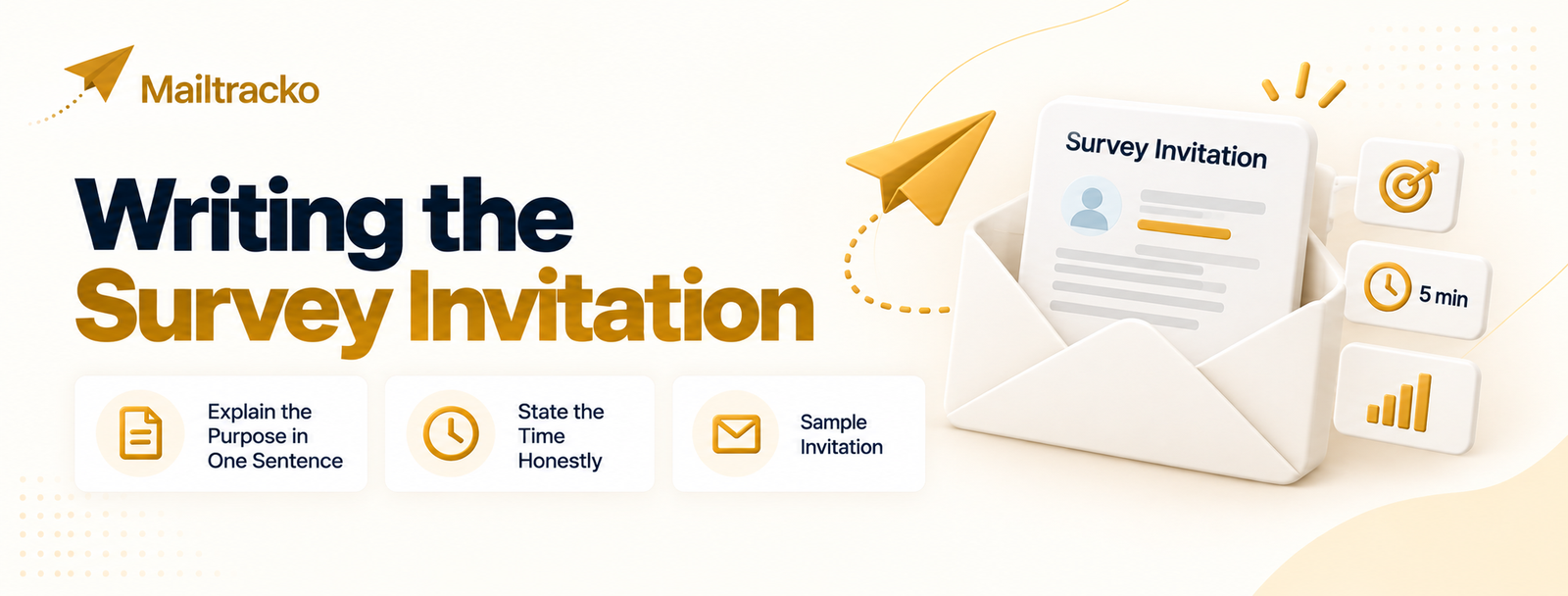
A good invitation genuinely tells the reader who is asking, why it matters, how long it takes and what will happen with the answers, in a few short lines.
Explain the Purpose in One Sentence
A line such as 'We are deciding which reporting features to build next, and we would like to hear from people who use reports every week' tells the reader exactly why they were chosen. Specific purpose is genuinely more persuasive than a general claim that feedback is valued, because it shows the survey is connected to a real decision.
State the Time Honestly
If the survey takes around five minutes, say so, and make sure it actually does. Understating the length to boost clicks tends to produce abandoned surveys and annoyed customers, so it is genuinely better to be accurate even if the honest estimate looks slightly less attractive.
Sample Invitation
Subject: Five minutes on how you use reports?
Hi {{First Name}},
We are deciding what to build next for reporting, and you are one of the people who use it most at {{Company}}. Would you share your views in a five-minute survey? I read every response, and last time your answers led to {{previous change}}.
{{survey link}}
Thank you,
{{Sender Name}}
Using Incentives Without Bribing People
Incentives genuinely work best as a modest thank-you offered to everyone who responds, and they should never be tied to giving a particular kind of answer.
Why Rewards Can Distort Results
A large reward can attract people who click through quickly to claim it, and it can nudge respondents towards answers they think the company prefers. That makes the data genuinely less reliable, which defeats the purpose of running the survey, so it is worth keeping any reward small relative to the effort asked.
Never Tie a Reward to Positive Answers
Offering something only to customers who give a high score, or wording a reward so it implies a favourable answer is expected, turns research into manipulation. In some places rules on reviews and endorsements also restrict this, so it is genuinely important to reward participation alone and to keep review requests and research surveys separate.
Check the Rules on Prize Draws
Prize draws are attractive because they are cheap per respondent, but they are regulated differently in different countries, with rules on terms, eligibility and whether purchase can be required. It is genuinely worth checking local requirements or using a simple guaranteed thank-you instead, which avoids the question altogether.
Keeping the Survey Short Enough to Finish
The survey itself genuinely determines completion more than the invitation, so every question should earn its place.
Start From the Decision, Not the Wishlist
Listing everything the team would like to know produces long surveys with low completion. Starting from the specific decision and asking only questions that would change it genuinely keeps the survey short and makes the results easier to act on.
Use One Open Question Well
A single well-phrased open question often produces more useful insight than several rating scales. Placing it near the end, after easier questions, genuinely helps respondents warm up, and reading those answers carefully is where most of the value tends to be found.
Test It on a Colleague First
Asking someone outside the project to complete the survey shows confusing wording, broken logic and how long it really takes. That small check genuinely prevents sending a flawed survey to hundreds of customers, which cannot be undone once responses start arriving.
Timing and Follow-Up
A single polite reminder genuinely helps response rates, while repeated chasing turns a research request into an annoyance.
Send Close to the Relevant Experience
Surveys about onboarding should arrive after onboarding, and surveys about support shortly after the conversation closes. Asking while the experience is fresh genuinely improves both response rate and the accuracy of what people remember.
One Reminder Is Usually Enough
A short reminder a few days later, sent only to people who have not responded, catches those who meant to answer but forgot. Going beyond one or two reminders tends to generate irritation rather than responses, so it is genuinely better to accept the result and improve the next survey.
Avoid Survey Fatigue
Customers who receive surveys after every interaction quickly stop answering any of them. Setting a limit on how often any one customer is asked genuinely protects response rates across all your research, not just the current survey.
Closing the Loop With Respondents
Showing customers what changed because of their answers is genuinely the strongest reason they will respond next time.
Share a Short Summary of Findings
A brief email after the survey closes, summarising what you heard and what you plan to do, tells respondents their time was not wasted. It does not need to disclose everything, but a genuine summary builds the credibility that future invitations rely on.
Name Specific Changes Later
When a change ships that came from survey feedback, saying so explicitly connects the dots for customers. That connection is genuinely more persuasive in future invitations than any reward, because it shows the survey was part of a real decision.
Thank People Individually When You Can
For smaller customer bases, a personal reply to a thoughtful open answer is remembered long after any gift card. It genuinely takes little time with a small list, and it turns a survey into a conversation rather than a data collection exercise.
Sending Survey Invitations at Scale
Survey invitations can be sent with a mail merge, but they genuinely need careful segmentation and pacing so the survey reaches the right customers without looking like bulk mail.
Choose the Sample Deliberately
Inviting every customer is rarely necessary, and it can exhaust the list for future research. Selecting the customers whose experience is relevant to the decision, such as those who used a particular feature recently, genuinely produces more useful answers and leaves everyone else free of another request.
Personalise the Reason They Were Chosen
A merge column explaining why each person was invited, such as {{Feature used}} or {{Onboarding date}}, makes the email read as a considered request rather than a broadcast. That single personal detail genuinely does more for response rates than a larger reward, because it shows the customer was selected rather than swept up.
Pace the Send and Watch Replies
Sending in modest batches from a Gmail-based tool such as MailTracko spreads the load and lets you answer questions that arrive as replies. Customers sometimes reply with their feedback directly instead of using the survey, and those replies are genuinely worth reading and logging alongside the formal responses.