Emailing Investors What Founders Get Wrong
By Julia Morgan · Published 2026-10-29 · Updated 2026-10-09
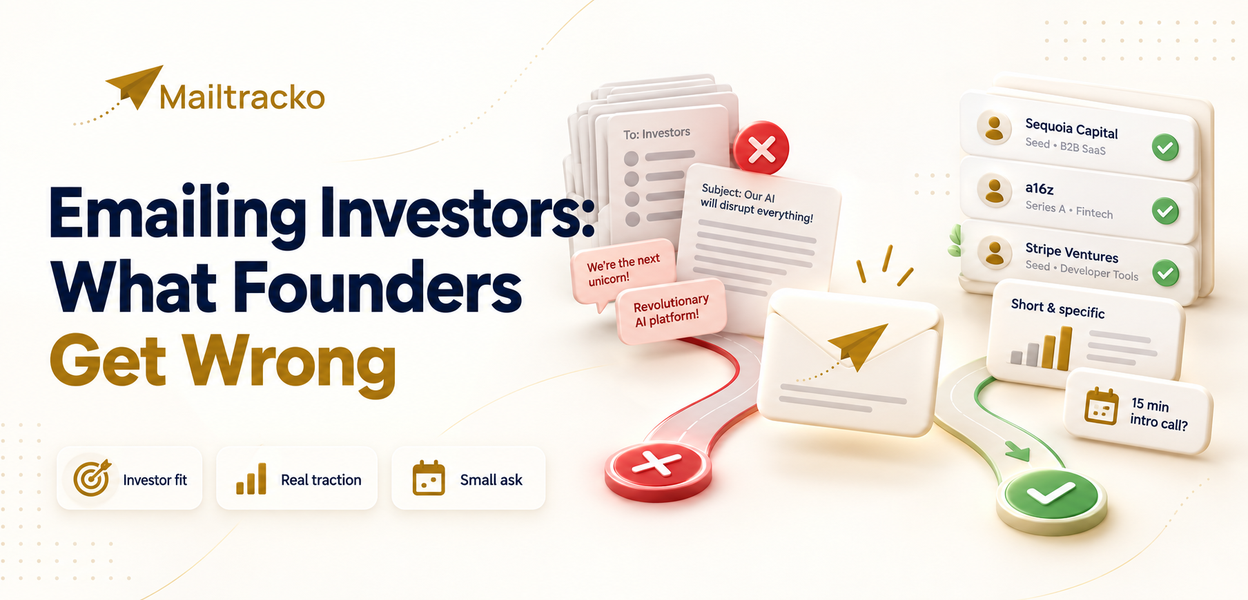
Founders raising money often treat investor outreach like a numbers game. They build a spreadsheet of several hundred funds, write one long email about the company, merge in the partner's first name and send it to everyone. The logic seems reasonable, since fundraising is partly about volume, but most of those emails are deleted within seconds, and a few may genuinely harm the company's reputation among investors who talk to one another more than founders expect.
Investors receive a very large number of unsolicited emails, and they have developed quick filters. They look at whether the company fits what they invest in, whether the founder seems to understand who they are writing to, and whether there is a single specific reason to take a meeting. Many investors also state openly that they prefer warm introductions, which is worth taking seriously even though cold emails do sometimes work, particularly with investors who say publicly that they welcome them.
There is also a line founders need to be careful about. Statements made to investors about traction, revenue or customers carry more weight than claims in marketing, and in many places misleading statements in a fundraising context can have legal consequences, while rules on how investment may be solicited vary by country. None of this is legal advice, but it is genuinely a reason to be precise. This guide covers the most common mistakes, how to choose investors, how to write the email, how to follow up and how to use updates.
Quick Answer: Founders get investor emails wrong by mass-merging long pitches to poorly matched funds, making vague or inflated claims and asking for too much too soon. A better email goes to investors who genuinely fit your stage and sector, states one verifiable piece of traction, asks for a short call and attaches a concise deck.
The Mistakes Founders Make Most Often
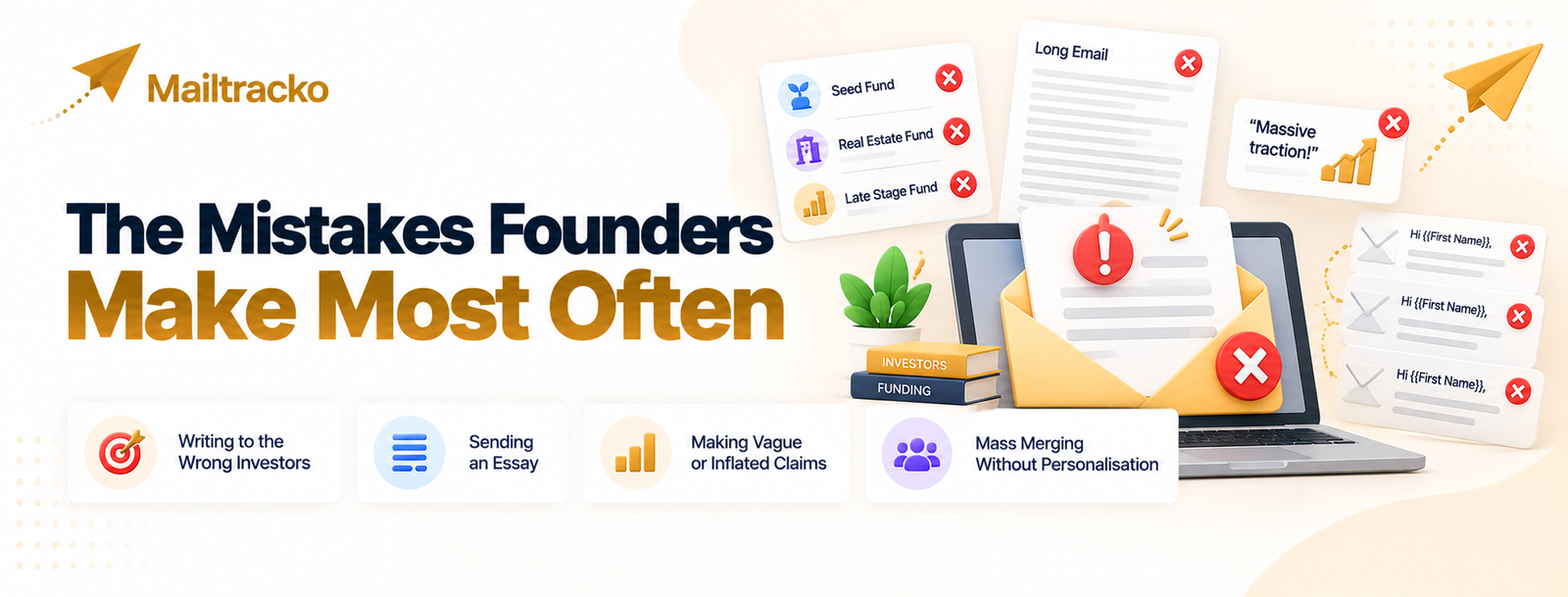
Most failed investor emails genuinely fail for a handful of predictable reasons that have nothing to do with the quality of the company.
Writing to the Wrong Investors
Emailing funds that do not invest at your stage, in your sector or in your region is the most common and most avoidable mistake. Investors genuinely notice immediately, and a mismatched email signals that the founder did not do basic research, which colours how they see everything else.
Sending an Essay
Long emails explaining the whole company, the market and the founder's story ask too much of a busy reader. Investors genuinely want to decide within a few lines whether to look further, so the email's job is to earn a look at the deck, not to replace it.
Making Vague or Inflated Claims
Phrases such as 'massive traction' or 'huge market' without numbers are ignored, while inflated figures are worse, because they usually unravel in due diligence. A single accurate, specific figure is genuinely more persuasive than several impressive-sounding ones that do not hold up.
Mass Merging Without Personalisation
Obvious mail merges, especially those that address the partner by name but say nothing about why this fund, are recognised instantly. Investors genuinely compare notes, and a founder seen spraying the same email across a whole market can look less, not more, credible.
Choosing Investors Who Might Say Yes
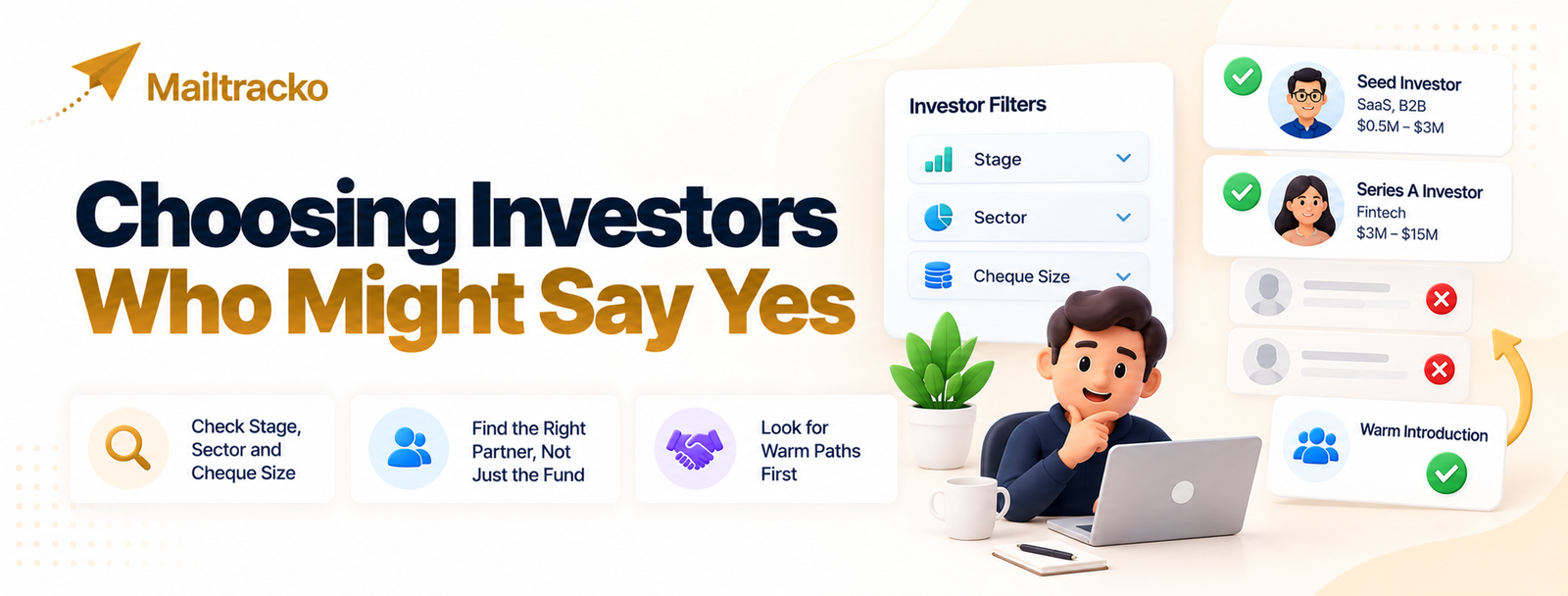
A short list of investors who genuinely fit your stage, sector and cheque size produces far more meetings than a long list of loosely related funds.
Check Stage, Sector and Cheque Size
Most funds describe what they invest in on their website, and their past investments show it more reliably. Filtering for investors who have genuinely backed companies at your stage and in your space removes most of the list and most of the rejections.
Find the Right Partner, Not Just the Fund
Within a fund, different partners often focus on different areas. Emailing the partner whose past investments match yours is genuinely more effective than writing to a general address or the most senior name on the website.
Look for Warm Paths First
Before emailing cold, check whether a founder in the investor's portfolio, an advisor or a mutual contact could introduce you. Many investors genuinely weight introductions more heavily, and a good introduction can be worth dozens of cold emails.
Writing the Email Itself
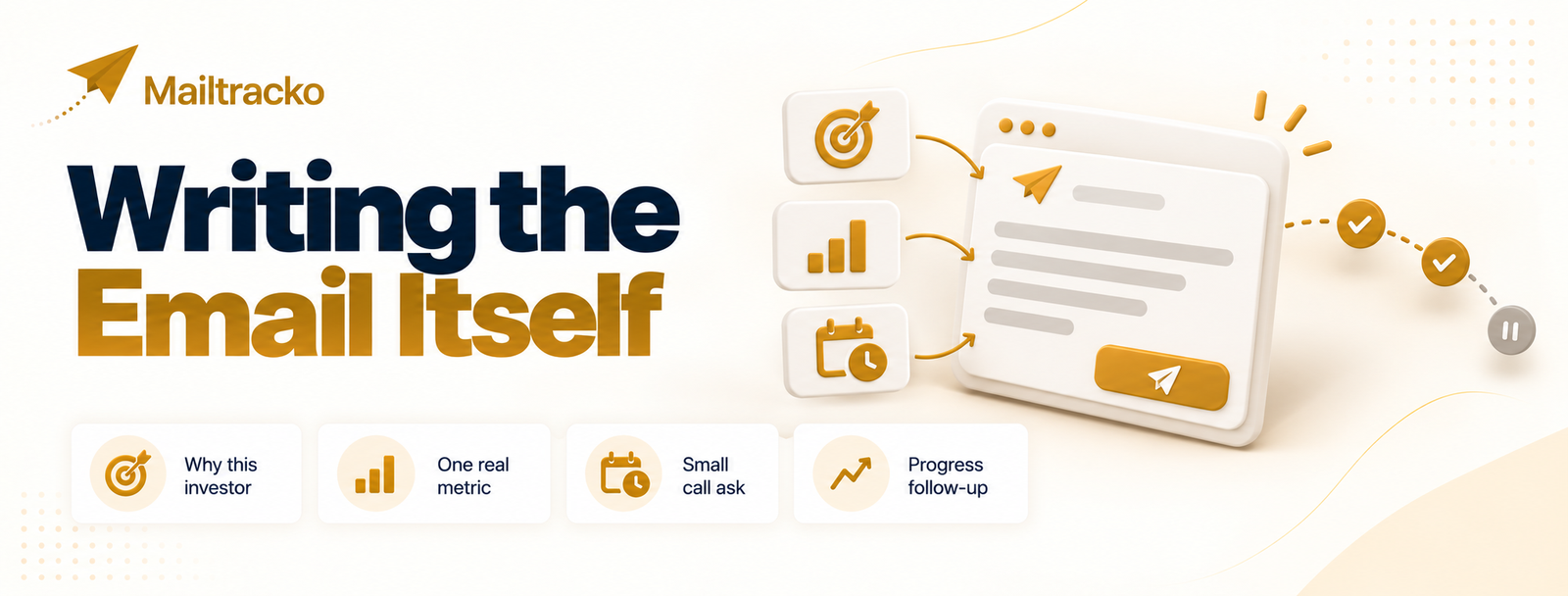
An investor email genuinely works when it explains why this investor, what the company does and one piece of evidence, all in a few short paragraphs.
Why This Investor
One sentence connecting your company to the investor's thesis or past investments shows the email was written for them. It genuinely changes how the rest of the email is read, because the investor starts from the assumption that the founder understands their focus.
What You Do and the Evidence
Describe what the company does in plain language, then give one verifiable signal such as revenue, growth, retention or a notable customer. The figure should be precise and defensible, because investors genuinely remember numbers and will check them later.
A Clear, Small Ask
Ask for a short call or whether they would like to see the deck, rather than asking them to invest. A small ask is genuinely easier to accept, and it moves the conversation forward without forcing a decision the investor is not ready to make.
Sample Email
Subject: {{Company}}: {{one-line description}} ({{stage}})
Hi {{First Name}},
I saw you backed {{portfolio company}}, so I thought {{Company}} might interest you. We help {{customer}} {{outcome}}. Since {{date}}, we have reached {{verifiable metric}}. We are raising {{round}} to {{use of funds}}.
Would you be open to a 20-minute call? Deck attached.
{{Founder Name}}
Following Up Without Damaging the Relationship
Following up once or twice is genuinely normal in fundraising, but each follow-up should bring something new rather than a reminder.
Wait a Reasonable Interval
Investors are busy and some take a week or more to reply to anything. Following up after roughly a week to ten days is generally acceptable, while following up after a day or two genuinely reads as impatience.
Share Progress, Not Pressure
A follow-up that mentions a new customer, a product milestone or an updated metric gives the investor a reason to look again. Artificial pressure, such as claiming the round is nearly full when it is not, genuinely backfires once the investor learns the truth.
Accept Silence as an Answer
After two follow-ups, silence usually means no, at least for now. It is genuinely better to add the investor to your update list and let progress speak later than to keep emailing someone who has already decided.
Using Investor Updates to Build Relationships
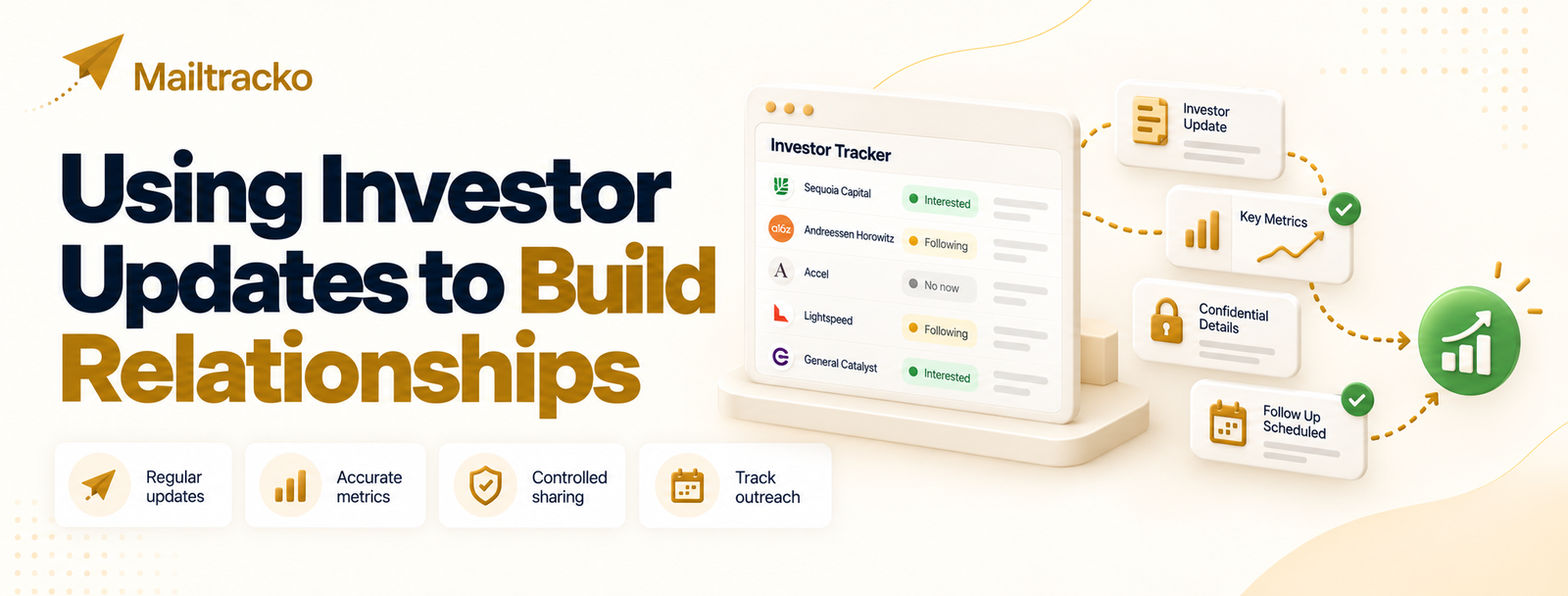
Regular, honest updates genuinely turn a no today into a yes later more often than any single pitch email.
Ask Permission to Send Updates
When an investor passes or goes quiet, asking whether you can keep them informed is usually welcomed. It genuinely keeps the relationship alive and lets them watch the company's progress over time, which is often what investors want before committing.
Keep Updates Short and Consistent
A brief monthly or quarterly update with key metrics, progress, challenges and specific asks is easy to read and builds a track record. Consistency genuinely matters more than polish, because it shows the founder can keep commitments.
Report Bad News Too
Updates that only share good news look like marketing. Including honest challenges and how the team is responding genuinely builds trust, because investors know every company has problems and they respect founders who acknowledge them.
Staying Accurate and Compliant
Precision genuinely matters more in investor emails than in almost any other outreach, because claims made in a fundraising context carry real weight.
Only State What You Can Support
Every figure in an investor email should be something you could evidence in due diligence. Rounding up generously or presenting projections as results can genuinely create serious problems later, both for the relationship and potentially legally.
Be Aware That Solicitation Rules Exist
Many countries have rules about how securities may be offered and to whom, and these can affect how widely a raise can be promoted. The details vary and change, so it is genuinely worth taking proper legal advice before running any broad outreach about a fundraise.
Keep Confidential Information Controlled
Detailed financials, customer names and strategic plans do not need to be in a first email. Sharing them later, once there is genuine interest, keeps sensitive information in fewer hands and is normal practice.
Organising Investor Outreach Without Losing Track
A simple tracking sheet genuinely keeps investor outreach organised, prevents duplicate emails and makes follow-ups timely.
Track Every Investor in One Place
Columns for fund, partner, fit notes, introduction route, date contacted, status and next step turn a scattered process into a manageable one. Founders raising while running a company genuinely need that structure, because investor conversations often stretch over months.
Avoid Emailing Two Partners at One Fund
Contacting several partners at the same fund separately can look disorganised and may lead to awkward internal conversations. It is genuinely better to choose the most relevant partner and let them involve colleagues if interested.
Send Personally, Even With a Tool
A Gmail-based tool such as MailTracko can help with tracking and scheduling, but each investor email should still be written individually. The tool genuinely helps with the logistics; it should not turn a carefully researched list into a template blast.