Onboarding a New Salesperson to Your Outreach Process
By Julia Morgan · Published 2026-10-24 · Updated 2026-10-26

A new salesperson arrives, is given the templates and the prospect list, and starts sending in their first week. It feels efficient, and it routinely produces problems that take months to surface: prospects contacted twice, a domain reputation damaged by careless list handling, and messages that misrepresent what the product does.
The underlying issue is that outreach looks simpler than it is. The mechanics are easy to demonstrate in twenty minutes, while the judgement — who is worth contacting, what claim is defensible, when to stop — takes considerably longer to develop. Handing over the mechanics without the judgement is what causes the damage.
A structured onboarding gets someone productive without that risk. This guide covers what to teach first, how to let them practise safely, the technical setup that protects the domain, what to check before they send at volume and how to tell when they are ready.
Quick Answer: Teach the audience and the product before the tools, let the new person write messages that someone reviews before sending, and start them at low volume from a properly authenticated address. Check their first campaigns against the same QA checklist everyone uses, and increase volume only once quality is consistent.
What to Teach First

Understanding the customer genuinely has to come before any instruction in tools or templates.
The Customer Before the Product
A new person genuinely needs to understand who buys, what problem they have and how they describe it before they can write anything that lands. Reading actual customer conversations, listening to calls or speaking to a few existing customers gives them this faster than any internal briefing.
The Product Honestly
Teaching what the product does not do, and which customers it suits badly, genuinely prevents the overclaiming that new salespeople fall into when they are uncertain. Someone who knows the limitations can be honest under questioning, which is what earns credibility in a first conversation.
The Rules Before the Tools
Suppression handling, account ownership and what must never be claimed genuinely need to be clear before anyone has access to send. These are the rules whose breach causes lasting damage, and learning them after a mistake is considerably more expensive than learning them first.
Practising Safely
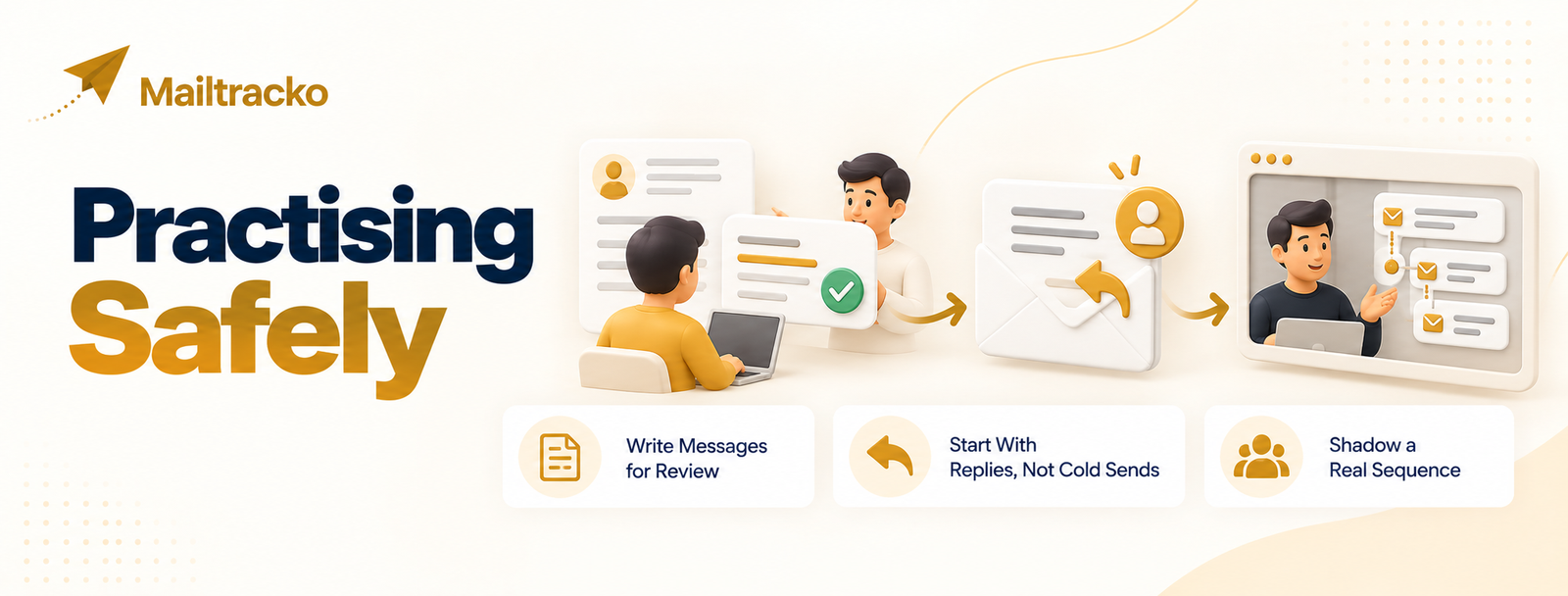
A new person genuinely should write before they send, with someone reading the output.
Write Messages for Review
Having the new person research prospects and draft messages that a colleague reviews, before anything is sent, genuinely surfaces misunderstandings while they are cheap to correct. A week of this produces better messages than a week of sending and reviewing the results.
Start With Replies, Not Cold Sends
Handling responses to existing conversations genuinely teaches the objections, the questions and the language faster than cold sending does, and the risk is lower because the prospect already engaged. This also gives the new person early wins, which matters for confidence.
Shadow a Real Sequence
Watching an experienced colleague research, write and follow up on a real prospect genuinely conveys the judgement that written guidance cannot. An hour of this is worth more than a day of reading the playbook.
Technical Setup That Protects the Domain

A new sender genuinely carries real risk to the domain, and the setup should reflect that.
Authenticate the New Address
A new mailbox on the existing domain genuinely inherits the domain's authentication, and it should be confirmed rather than assumed by sending a test and reading the results. A new address sending unauthenticated mail damages the domain that carries everyone else's.
Start at Low Volume
A new mailbox genuinely has no sending history of its own, and beginning with a small daily volume that increases gradually avoids the pattern that attracts filtering. This applies even on an established domain, because the account itself is new.
Use the Team's Sending Setup
Having the new person send through the same arrangement as everyone else genuinely keeps their activity visible and consistent. Sending from their own account through a tool such as MailTracko working from the shared sheet means their outreach appears in the same records as the rest of the team's.
Checking Their First Campaigns
The first campaigns genuinely need the same checks as everyone else's, applied more carefully.
Run the QA Checklist Together
Going through the pre-send checklist with the new person for their first few campaigns genuinely teaches the checks and catches the errors simultaneously. After a few rounds they run it themselves, which is the point.
Review the Prospect List, Not Just the Message
A new person's list genuinely reveals whether they have understood the ideal customer profile, and a poor list produces poor results regardless of the writing. Checking who they chose, and asking why, is more diagnostic than checking what they wrote.
Watch the Bounce Rate
A high bounce rate from a new person's first sends genuinely indicates guessed addresses or an unverified list, and it damages the domain immediately. This is the number to watch most closely in the first weeks.
Knowing When They Are Ready
Readiness genuinely shows in consistency rather than in a single good campaign.
Consistent Quality Across Campaigns
One good campaign genuinely proves little, while three consecutive ones with clean lists, specific openings and no QA failures indicate the process has been internalised. Volume should increase against that evidence rather than against elapsed time.
Sensible Handling of Replies
How a new person handles a difficult reply — an objection, a complaint, a question they cannot answer — genuinely reveals more about their readiness than their sending does. Reviewing their responses for the first weeks is worth the time.
Asking the Right Questions
A new person who asks whether a particular prospect fits the profile, or whether a claim is defensible, genuinely demonstrates the judgement that matters. Someone who has stopped asking questions early is more concerning than someone who asks many.
A First Month Structure

A structured first month genuinely produces a more capable salesperson than immediate sending does.
Week One: Customers and Product
The first week genuinely is best spent understanding who buys and why, through customer conversations, recorded calls and the product itself. Sending nothing in this week feels slow and pays back quickly. A new person who understands the customer writes better messages from their first attempt. This week should also cover the firm rules and the suppression process. It establishes the judgement that everything else depends on.
Week Two: Research and Drafts
The second week genuinely suits research and message drafting reviewed by a colleague, without live sending. This surfaces misunderstandings while they cost nothing. The new person builds a small list and writes the messages for it, which are then reviewed together. By the end of the week they have produced work that is nearly ready to send. This is considerably more productive than a week of unreviewed activity.
Week Three: Low Volume Sending
The third week genuinely can involve real sending at a small daily volume, with the pre-send checklist run together. This also begins warming the new mailbox, which needs to happen regardless. Replies arriving in this week provide the most valuable training available. The volume should stay low enough that mistakes are contained. Reviewing each campaign afterwards turns them into lessons.
Week Four: Building Independence
By the fourth week the new person genuinely should be running the process with lighter review, and volume can increase against evidence of quality. Their first handled objections and first booked conversations happen here. Review shifts from every campaign to a sample. The goal is a person who knows when to ask rather than one who never asks. Independence should follow demonstrated quality rather than the calendar.
Common Onboarding Mistakes
A few predictable errors genuinely undermine otherwise reasonable onboarding.
Handing Over the List Immediately
Giving a new person the prospect list on day one genuinely invites them to start sending before they understand who should be contacted. The list is the accumulated result of judgement they do not yet have. Introducing it after the customer and criteria are understood produces better use of it.
Teaching Tools Before Customers
Starting with the sending tool and the templates genuinely teaches the mechanics without the judgement, which produces well-formatted messages to the wrong people. The tools take an hour to learn at any point. The customer knowledge takes considerably longer and should start first.
No Review of Early Sends
Allowing a new person to send unreviewed in their first weeks genuinely risks the domain, the list and the brand simultaneously. Reviewing their first campaigns costs little and catches the errors that would otherwise be discovered through poor results. This is protection rather than distrust.
Setting Volume Targets Too Early
A volume target given before quality is established genuinely produces the behaviour it measures: high volume and poor research. Quality expectations should come first, with volume increasing once quality is consistent. Reversing this order is difficult to correct afterwards.
Measuring Onboarding Success
Whether onboarding worked genuinely shows in specific indicators rather than in general impressions.
Time to First Quality Campaign
How long it takes a new person to run a campaign that passes review without significant corrections genuinely measures the onboarding rather than the person. A process that consistently takes two months for capable hires needs improving. Recording this for each new starter builds a benchmark. It also identifies which stage causes the delay.
Bounce Rate in Early Sends
A high bounce rate from a new person's first campaigns genuinely indicates that list quality standards were not conveyed. This is measurable immediately and it matters because it affects the domain. Watching it closely in the first weeks catches the problem before it accumulates. It is one of the clearest early signals available.
Quality of Reply Handling
How a new person handles their first objections and difficult questions genuinely reveals whether they understood the product and the customer. Reviewing these responses is more informative than reviewing their outbound messages. It also identifies gaps in what they were taught. This should be part of the first month rather than an afterthought.
Whether They Are Still Asking Questions
A new person who stops asking questions early genuinely may have stopped noticing uncertainty rather than resolved it. Continued questions about fit and claims are a positive sign. The pattern of questions changing from mechanical to judgement-based indicates progress. This is qualitative and it is worth paying attention to.